Saturday, June 29, 2019

Wirelessly Charging Phones and Tablets

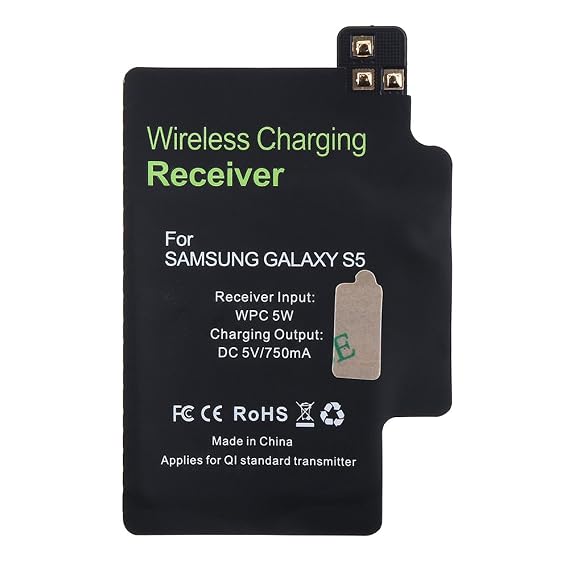
Most newer phones and tablets can wirelessly charge without any modification. If you have a wireless charging pad, just place your phone on it and see if it charges. Even some older devices that you'd never think are chargeable wirelessly actually are able to. I placed my Nexus 7 (which is more than 5 years old on a charging pad and it charged). If your device is not Qi equipped (which is the terminology for wireless charging), you can get an receiver that will attach to the battery if you can get to the battery or an adapter that will fit between the back of the device and the cover, each for about $10 (from Amazon and elsewhere), and each will enable your device to charge wirelessly. 

This is what an adapter looks like:

 Wireless Charger Receiver IGOUKJ Ultra Slim Portable Endurable Narrow Interface Down Negative Wireless Charging Receiver for Universal Android Micro USB Port Phone (Negative direction type B receiver)

This is what a receiver looks like:

DiGiYes Qi Standard Wireless Charger Receiver Module for Samsung Galaxy S5 i9600 i9700


Identifying the Birds and the Bees and the Flowers: There Are Apps for That

If you’ve ever hiked through the woods with one of those savants who can identify every plant, every tree, every berry, bug and birdsong, you know it can be a revelation. When we’re alone in the trees with our ignorance, however, nature remains an inscrutable beauty. It needn’t be. On recent walks through Alabama forests and Brooklyn cemeteries, I experimented with apps that use my smartphone’s camera and microphone—plus cloud-based machine learning technology—to identify plants and animals around me as quickly as Shazam can recognize a deservedly obscure Adam Ant song. I now know a nightmarish-looking red mushroom I saw pushing its way through the grass was an “Elegant Stinkhorn.” And that the avian chorus crooning at my window each morning and interrupting my sleep isn’t just a bunch of stupid birds; it’s a bunch of stupid “house sparrows.” Here, three free apps to demystify flora, fauna, and fine feathered frenemies.
BirdNET: It’s often easier to hear a bird than see it, particularly when the tree canopy is dense with leaves. But if you’re curious about what’s accompanying your barbecue so melodically, BirdNET lets you record snippets of song and upload them for instant analysis. It can match your recordings with those of the birds in its database—soon to top 1,000 species. The app displays its findings, its level of certainty and a link to the creature’s Wikipedia page. Available for Android
Seek: Able to identify anything from a porcupine to a porcini, Seek analyzes whatever you point your phone’s camera at, working its way up the tree of life in real time—revealing the kingdom, phylum, class, order, family, genus and finally species. While Seek does its work quickly and with impressive accuracy, always consult a trusted expert before eating anything. You shouldn’t bet your life on an app’s attempts to discern the difference between a delicious honey mushroom and a deadly galerina. Available for iOS and Android
Merlin: This app offers two avenues for ornithological identification; either snap a photo and submit it, or just answer a few basic questions about the bird in question. What is its coloring? Is it bigger than a raven? Smaller than a goose? The app uses uploaded info along with your location and observations from the eBird community to suggest likely candidates, delivering images of the bird in question, plus relevant info and audio clips of its songs and calls. If your signal is wimpy in the wild, geographic packs covering more than 60 countries and 3,500 species can be easily downloaded. Available for iOS and Android
[Courtesy of the WSJ]

Friday, June 28, 2019

Why Biden Took Himself Out of the Presidential Race at the Debate

As our loyal readers know, we don't do politics. But we do analyze political events. The reason Biden’s performance Thursday night in the debate might have been fatal (apparently his numbers are already dropping and who knows about his fund-raising) is not so much that he came out so badly substantively on busing and other stuff (and he surely came out really badly), but because he cast substantial doubt as to his ability to debate Trump (on stage or otherwise) as well as a Harris could or a Warren could. Put another way, given that Harris beat him like a drum on the debate stage, it is fair to ask, as apparently is being done, whether he can be trusted to take on Trump on the debate stage (or any stage)?

Auto-Deleting Google's Activity and Location Data Tracking

Google is following through on its promise to let you auto-delete your activity and location data. It's now rolling out location history deletion tools to Android and iOS, giving you a relatively simple way to limit the scope of Google's location tracking. You can only choose between deleting data after three or 18 months, but it beats leaving an extensive trail of info that you might not want Google or others to see.

Thursday, June 27, 2019

Removing Rust Stain From a Pool Floor or Wall

There is no reason to panic if a rust stain appears on your pool floor or wall. It will come off completely using muriatic acid through a tube. You can do it yourself, but the better practice is to leave it to your pool professional.

PS: Many loyal readers have asked how one might get a rust stain on a pool floor or wall. The answer is there are too many ways to count. It might even be the result of a micro-burst that catapulted your pool-side umbrella with its metal stand into the pool where it sat overnight.

PPS: Many other loyal readers have asked how they would know if there is a rust stain on their pool's floor or wall. The answer is: It will be obvious, and will look something like this:

Image result for rust stain on pool floor

Wednesday, June 26, 2019

Two Suggested Rules for Televised Candidate Debates

One can only applaud the stamina of anyone who watched last night's first Democratic debate for more than a few minutes. Two rules would do wonders: (i) The participants must say "yes" or "no" before going on answering any question; and (ii) all questions must be framed as "yes or no" questions.

PS: The NYT posted this letter online on June 27 and it will appear in print on June 28.

Link to Online Version of the Letter

Ten Questions for Mueller

Don't expect the Failing NYT to print this, but it is hoped they pass it on to their crack columnists:

To the Editor:

            When Mueller testifies before the Joint House Committees, the hearing can either veer off into tangential matters or focus on the core issue: Whether or not there is sufficient evidence to declare that Trump obstructed justice. Here are the questions to put to Mueller to answer the matter definitively:

Q1: Was there any law, regulation, or guideline or anything else that prevented Barr from stating his conclusion, based on your report, that Trump did not obstruct justice?

Q2: You are aware are you not that Barr expressed his surprise and lack of objection  to your stating in your report or otherwise whether or not you found that Trump obstructed justice?

 Q3: Is there enough evidence presented in your report for someone to read the report and conclude whether or not Trump obstructed justice?

Q4: Is there enough evidence presented in your report or which you otherwise are aware of for you to conclude whether or not Trump obstructed justice?

Q5: Have you reached a conclusion as to whether or not Trump obstructed justice?

Q6: Are you aware of any law, regulation, or guideline or anything else that prevented you or would prevent you today from stating your conclusion as to whether or not Trump obstructed justice?

Q7: What is your conclusion as to whether or not Trump obstructed justice?

Q8: Have you reached a conclusion as to whether or not Trump’s conduct would warrant an indictment for obstruction of justice but for the OLC guidelines?

Q9: Are you aware of any law, regulation, or guideline or anything else that prevented you or would prevent you today from stating your conclusion in that regard?

Q10: What is your conclusion as to whether or not Trump’s conduct would warrant an indictment for obstruction of justice but for the OLD guidelines?

Further, just to cover the contingency that Mueller refuses to answer (which should subject him to contempt proceedings), the Joint House Committees should issue subpoenas to have the other attorneys on his team come before them as well and put the same questions to them.

                                                         *     *     *

Business Class Does Not Always Equal Business Class

When traveling on long-haul flights, nothing says "welcome aboard" like a lie-flat seat, which is what business class is all about. Or at least, it's what business class is supposed to be all about. Unfortunately, you need to be careful, especially with European airlines that often re-define their business class as "economy class but the middle seat is not sold or might just be removed." Put another way, if you're paying for business class, be sure you're buying a lie-flat seat, or expect to arrive at your destination in a grumpy mood. If you're not sure what the difference is between a lie-flat seat and economy class seat, these illustrations should help:

What lie-flat seating looks like:

Image result for first class lie flat seats emirate

What economy class seating looks like:

Image result for crammed economy class seats

Sunday, June 23, 2019

Finding and Using Travel Funds on Southwest Airlines

1. When you cancel or change flights because of a price reduction on a Wanna Get Away flight on Southwest Airlines (SWA) that you paid for in dollars, your refund payment will be made in SWA Travel Funds that have to be used within one year. Good luck finding your travel funds. They are on a SWA.com website but not the one where everything else appears. Here is a link to locate your Travel Funds: Link to SWA Travel Funds

2. If you booked a flight with points but decide later to use dollars, such as Travel Funds, for the flight instead, you cannot do the switcheroo in one step. You have to actually cancel your point flight and then book your dollar flight. Your safer buying the new flight before canceling your existing flight. If you have trouble doing so online, a telephone rep will cheerfully do it for you at the same price you'd pay online. 

Saturday, June 22, 2019

Popularity of Game of Thrones Explained

Many loyal readers, all of whom have watched the entirety of Game of Thrones, or are addicted to it now as they plow their way through, are seemingly bewildered why they find the series so enthralling. We turned the question over for research and analysis to our Popular Overview Review Nabobs, who snorted in derision with the riposte: "The answer is obvious." And here is what they said: There are two problems people face in watching pornography: (i) If you do so through a computer streaming medium, you likely will be besieged with all kinds of stuff because of the tracking cookies that exactly what you've watched; (ii) in the main, pornographic movies are devoid of any plot line or dialogue to hold one's interest between salacious scenes; and (iii) at least soft porn is fairly unimaginative in its depictions. Game of Thrones solves both problems. First, one need not unduly worry about tracking cookies watching on HBO or HBO-GO (yes, HBO will know you've watched it, but it won't lead to your being pummeled with offers to buy more pornographic stuff). Second, there is enough plot and enough dialogue (even if much of it is comprised of made-up words) to hold one's interest while one recovers from one salacious scene and gets ready for the next one. Third, many of the salacious scenes can take many viewers out of their comfort zone, which, after all, and as what any docent will tell you, is what all fine art does anyhow.  

Averages Aren't Always What They Seem

[Prefatory Note: You likely chuckled as inane the Garrison Keillor observation that, in Lake Wobegon, "All the children are above average." If so, it might behoove you to read the following courtesy of the Wall Street Journal, to understand more clearly that, just like sometimes it matters what the definition of is is, it is profound importance to understand that, when it comes to statistics, it matters what "average" means and what the underlying distribution curve looks like. It would be especially nice if the TV pundits had some clue what they were actually looking at when they report polling numbers, although it is possible the pollsters themselves actually don't get it either. PS: The author, Eugenia Cheng, who is Scientist In Residence at the School of the Art Institute of Chicago, is the second best mathematician I know personally]


According to one recent study, 54% of children have below-average reading skills. This sounds like a paradox: By definition, it seems that in any group 50% must be above average and 50% below average. But it all depends on what you mean by “average.” We often associate the word with the middle of a range of numbers, but in fact there are different types of averages that represent different things.
Averages are a way of summarizing a collection of data into just one number for convenience. On any ranked list of numbers, the one that appears most often is called the mode and the one that appears right at the middle of the list is called the median. The third and most commonly used type of average, the mean, is found by adding up all the numbers and then dividing by the total number of numbers.
The three types of average sometimes coincide, but not always. They are the same only when a graph of the numbers peaks in the middle and is symmetrical, as in a bell curve or “normal” distribution. The symmetry ensures that the mean will be exactly in the middle, where the median is; the peak in the middle shows that the mean and median are also the most common result, the mode. There are many naturally arising normal distributions, like the birth weight of babies and the amount of milk that cows produce.
But not everything has a normal distribution, which is why we need to specify what type of average we’re using in any given set of data. In some cases the peak is off to one side; if it is low, it makes the median lower than the mean. That explains how more than 50% of children can be below average in reading skills, if the average in question is the mean, pulled upward by a small number of excellent readers.
Sometimes there are two peaks in the data. A graph showing the use of public transportation, for instance, is likely to have two peaks, one in the morning and one in the evening. Taking the mean or median of these would be pointless, since it would fall in between the two peaks, giving the illusion that ridership is highest at lunchtime. This type of distribution is called bimodal and is usually a sign that our data splits into two distinct populations, such as men and women.
Sometimes the blending of two populations in a distribution is more subtle. If we look at a graph showing the heights of all adults, we won’t see two separate peaks for men and women, because the differences between the sexes aren’t large compared with differences among them. The shape of this graph is more like a bell curve somewhat flattened out at the top. But if we separate men and women, two bell curves will emerge, one slightly shifted from the other.
With two distinct populations, calculating a single average is misleading and sometimes even harmful. Historically, drug tests and other safety tests have focused on the average man, resulting at times in products dangerous to women. The first female-shaped crash-test dummy was introduced only in 2011. Previously a median male body shape was used, but most women are shorter and lighter, with less upper-body and neck muscle, making them much more vulnerable in crashes.
It’s often necessary to summarize data for practical reasons, but sometimes people will deliberately give a misleading average for dramatic or emotive effect. Greater awareness of the mathematics of averages and distributions makes it harder for us to be misled by the way that data is presented.

Friday, June 21, 2019

Chrome vs. Firefox re Cookies

This article from WAPO will be of interest to anyone who might consider switching from Chrome to Firefox to reduce browser cookie collection. Link to Article  Note that the author does not address whether there's any problem keeping cookies you want with Firefox so that you don't have to re-login to sites you visit daily or frequently. In all events, if the cookie issue is of concern to you, you can try Firefox without uninstalling Chrome and, in the meantime, in two clicks delete all your cookies in Chrome--although what good this does, if any, the author does not say.

Smart Appliances: Plus for Home Resale; Often Not So Much for Cost Savings

[Courtesy of the WSJ]

Homeowners Rick Alsagoff and Bruce Alton cut energy costs by the clock—and keep track with their smartphones. The couple recently installed two Tesla Powerwall batteries, which store energy generated by solar panels on the roof of their Long Beach, Calif., home. During the day, the batteries power the house—everything from their lights to the air conditioning to the electric ovens Mr. Alton uses for his home-based artisanal bakery. At night, when utility rates are lowest, the home gets electricity from Southern California Edison. An app allows Mr. Alsagoff, a 68-year-old insurance agent, and Mr. Alton, 71, to customize their battery settings, even allowing them to reserve some power in the event of an outage.
Apps can help homeowners monitor their appliances’ energy usage. PHOTO: PATRICK STRATTNER FOR THE WALL STREET JOURNAL
Both the city of Long Beach and Southern California Edison, their utility provider, inspected the installation so they can be switched to a new “time of use” billing method. Once done, they estimate their average electric bill will drop from $250 a month to about $100 a month. They estimate it will take between five and six years for the savings to pay for the Powerwall batteries, which cost about $11,000 after $6,000 in federal and state tax credits, but the couple was motivated by other reasons.
Homes with smart appliances sold for 22.7% more than comparably sized properties in the same ZIP Code.
—Source: Zillow
“We’re both environmentally conscious,” Mr. Alsagoff says. “Bruce especially. He’s one of these tree-huggers. Everything’s got to be green.”
Smart technology like the Powerwall system is increasingly found in high-end homes. (See “Home Smart Home” on M7.) Using internet-based apps, homeowners can adjust their lighting, window blinds, thermostats, hot-water heaters and sprinklers based on need and the time of day to reduce both electricity and water usage. Devices with smart technology, such as motion detectors and power strips, can shut off the juice when they’re not in use. Washers and dryers have apps that allow homeowners to choose water- and energy-saving cycles. They can even flag issues, such as a clogged dryer vent, that could be making them inefficient and unsafe. A refrigerator app can notify owners if the door is open or its water filter needs to be replaced. Some fridges include cameras so owners see the contents without opening the door.
While homeowners may be helping the environment, they aren’t necessarily saving buckets of money when they take into account the cost of buying and installing the latest technology. An analysis last year of ten popular smart-home devices estimated that the average homeowner would save about $996 a year if he or she installed them all, according to Simply Self Storage, an Orlando, Fla.-based storage company, which tabulated claims made by smart-device manufacturers.
But that’s not to say that smart technology is a dumb idea. These apps and devices can offer timesaving conveniences, help homeowners reduce their carbon footprint, keep homes secure and ensure backup power in blackouts or other emergencies.
Mr. Alton with the Tesla Powerwall batteries that help keep energy costs down. PHOTO: PATRICK STRATTNER FOR THE WALL STREET JOURNAL
And homeowners who make pricey upgrades in smart-home technology may recoup their investment when they sell. Research released in April by real-estate website Zillow found that, between 2017 and 2018, homes with smart appliances sold for 22.7% more than comparably sized properties in the same ZIP Code; homes with smart lighting sold for 11.2% more; homes with a smart thermostat for 7.8% more; and those with keyless entry or smart locks for 0.5% more.
House hunters may not be looking for smart-home features, but putting them in the listing description signals that the home has “green” and other high-end features, says Skyler Olsen, Zillow’s director of economic research.
The Powerwall’s inverter, which converts battery power into household alternating current. PHOTO: PATRICK STRATTNER FOR THE WALL STREET JOURNAL
Mr. Alsagoff says his home’s smarts go beyond the solar batteries. He and Mr. Alton can also digitally control their lights, media components, thermostat, door locks and security cameras.
A Tesla gets a recharge. PHOTO: PATRICK STRATTNER FOR THE WALL STREET JOURNAL
And despite the price premium on smart homes, the couple has no intention of selling their property, located in the Bixby Knolls neighborhood of Long Beach, where nearby homes list from the low $500,000s to about $1.5 million.

Thursday, June 20, 2019

Two Excellent Pieces in the June 24 New Yorker

The New Yorker apparently gets delivered to loyal readers in San Francisco several days ahead of being delivered to us. That said, we are grateful to his alerting us to the excellent piece by Nick Paumgarten on Augusta National (and much related stuff thrown in). At the same time, we are perplexed why he didn't mention the immediately preceding (and in a sense not unrelated) excellent piece by Sheelah Kolhatkar on Elizabeth Warren. If the June 24 issue has been delivered to you, be sure to pick it up and read these two articles. If you are not a subscriber, a trip to the newstand or library will be worth it.

Getting Through Airport Security

There are three options for getting through TSA security faster. This article explains each in detail, including how to get them and which, if any, to choose: Link to Article From cnet


Best Free Second Opinion Malware Scanners

[Courtesy of Gizmo's Freeware]

Traditional antivirus protection works great for most users but no software is perfect. We live in a world full of security holes and bugs where patches and updates try to come to the rescue at the end of the day.

While capabilities of antiviruses have evolved over time adding layers of protection, so has malware themselves being able to compromise any system they get their hands on. As the contest and quarrel of the "Best antivirus software" goes on and on, the intelligent few accept that nothing is perfect and use a secondary opinion scanner to confirm their systems are actually safe. Also the unlucky few who were infected finally turn their heads to these on-demand scanners to remove persistent malware. 

Second opinion scanners are neither meant to replace traditional antivirus suites nor to be used in real-time on your system. They are only meant to be run either to ensure your system is free of malware, or to remove malware from a heavily infected system or even to remove potentially unwanted programs and annoying adware that an antivirus mostly misses. Ideally they are required to be run only once a week or on-demand and are your second line of defense against these bad guys!

Emsisoft Emergency Kit  

Portable anti-malware with best-in-class malware signatures


Our Rating: 
4.5
License: Free
Pleasing GUI, Portable installer, Easy to use, Fast scan speeds, Uses Bitdefender database, Good at detecting old malware & malicious registry keys, effective against PUP's & adware, able to implement direct disk access and scan in NTFS alternate data streams
Huge download size, Large updates, No proper cloud implementation, Poor against new and fileless malware, Occasional pop-up ads
Read full review...

Zemana AntiMalware  

Cloud based anti-malware powered by multiple engines


Our Rating: 
4.5
License: Free (Limited features)
Small download size, High PUP/adware detection, Strongest against fileless malware & active malware processes, Cloud based, Drag n drop scan support, Good signatures, Doesn't require updates, Portable version available
Slow scans, Not good against zero-day malware, Zemana v2 better than v3, Prone to false positives, Requires 2 separate scans for best protection
Read full review...

HitmanPro  

Best malware scanner in the category but no free removal capability


Our Rating: 
4
License: Commercial (Trial/Demo available)
Fully portable, Cloud based, Powerful scanner, No signature update required, 4 popular scan engines with VT integration, Early score warning to combat zero-day malware, Fast scan speed, Direct disk access mode, Best against old & new malware and PUP's, Scheduled scans
Free scans but no free removal, Performs poorly against fileless malware,
Read full review...

Norton Power Eraser  

Aggressive scanner with file reputation technology to beat malware


Our Rating: 
4
License: Free
Very fast scanning speed, Doesn't require signature, Fully portable, Multi-boot scan, Norton's file reputation to detect malware/PUP's, Strong at detecting malicious registry keys, Auto restore point creation, Cloud lookup, Option to undo previous fixes
Aggressive scans hence prone to false positives, No progress bar for scan status, Poor log reports, Requires multiple scan types, Mostly reputation based scans
Read full review...

Malwarebytes Anti-malware  

Best crime fighter against PUP's/adware


Our Rating: 
4
License: Free (Limited features)
-Best PUP & PUM detection, Very fast scan speeds, Self protection modules, Performs well against new ransomware, malicious registry keys, Has very good heuristics, Brilliant exclusion settings,Identified thread logs during scan, Signature-less anomaly detection for increased protection
No portable version, Turns premium trial on by default->Nag screen if turned off, Poor against regular malware & zero-day threats, No cloud engines, Needs to download signatures, Auto startup on boot by default
Read full review...