Sunday, September 30, 2018

Don't Worry About Kavanaugh's Future

[Prefatory Note: This was not my insight. It was sent to me by a non-reader who is a brother of a loyal reader]

If you have any concern that, should he not be confirmed, Kavanaugh's stated fears--can't coach young girls; can't teach con law; might be thrown off the bench; etc--will come to pass, you should put your concerns to rest. Kavanaugh will end up richer than his wildest dreams, for he will become the top spokesperson for Coors or Budweiser, whose lead-off add will feature Kavanaugh in television and print ads holding the respective labelled can, and saying: “I like beer. Boys and girls like beer. Don’t you?” 

Staging a House to Sell

[Reproduced Courtesy of the NYT]


When you put your house on the market, it may start to feel less like a place to live and more like a set to be decorated.

My dresser would have to go. Leave two dressers in a master bedroom and a potential buyer might suspect the closets are small.

Spoiler alert: They are small.

That wouldn’t be the only change I’d have to make if I put my house on the market and opened it up to a parade of strangers. My new bedspread, the one I bought after a year of searching for the perfect midcentury look, wouldn’t cut it, either. Instead, my bedroom was apparently begging for a fluffy white duvet with plenty of throw pillows. Throw pillows, you see, are key to selling a house. They should be big, bold and abundant, or so I’ve been told.

I’d invited my real estate broker over to help me decide whether I should sell my house and buy a larger one. As she toured my home, telling me what would need to be done to make it more appealing to potential buyers, I began to see that readying a house for sale is not unlike decorating a stage for a play, and perhaps just as hard. Consider these two basic rules of home staging.

One: Your house should not appear to be lived in by real people who own stuff.

Two: Buyers, who by their very nature apparently lack imagination, are wowed by “greige,” a color neither gray nor beige, but one where personal flair goes to die. (In other words, paint all your walls a pale shade of greige.)

She pointed to a light fixture at the top of the stairs that had been installed by a previous owner and that, I admit, is dated. But who really cares about a small, yet surprisingly effective, fixture at the top of the stairs? Buyers, that’s who.

“They’ll see it out of the corner of their eye, they might not even realize it,” she said. “But they’ll think of their grandmother.”

And if there’s one person you do not want buyers thinking about when they tour your house, it’s grandma. “They’ll think your house is old,” she explained, and trotted down the stairs.

But my house is old, I thought.

And so I began to see my house not as the place where I live my life, but as a set to be dressed so someone else could briefly live out a fantasy as they wandered through it.

And then maybe pay me a lot of money.

Home staging has become big business. What was once an indulgence for the luxury market has trickled down to the middle market, with sellers shelling out huge sums to transform their living rooms, kitchens and bedrooms into (greige) resort-like retreats meant to wow a potential buyer into not noticing that the living room is oddly shaped, with no logical place to put a television, or that the bathroom window looks out on the air shaft from the neighboring apartment building.


A 2017 National Association of Realtors survey found that 38 percent of brokers staged all of their listings, up from 34 percent in 2015, with almost half of those brokers reporting that staging a home increased the selling price.

The trend has been fueled in part by an endless loop of home makeover shows on networks like HGTV, where we watch homeowners burst into tears of joy at the sight of a shag rug and a statement wingback chair. There’s a good chance the furniture will be gone with the production crew, just like the furniture in that house or apartment you buy. But somehow, a well-appointed room convinces us that the perfect home is just one oversized brass mirror away.

“You’re creating a dream for the buyer,” said Donna M. Dazzo, the president of Designed to Appeal, a New York City home-staging company. “We’re just emotional creatures and we’re shopping based on emotion.”

But the dream doesn’t come cheap: Staging an empty property costs around 1 to 3 percent of the list price, depending on the region of the country, according to the Real Estate Staging Association. Sellers typically pay for the work. Even those who don’t spend thousands of dollars on a wholesale transformation do spend weeks cleaning, clearing out clutter, repositioning the furniture and, of course, tossing around the throw pillows, all to make their home feel like an idealized version of itself.

Scott Hunter and Joe Fazio spent $28,000 this summer staging their two-bedroom condo in the South Street Seaport in Manhattan. It had been sitting on the market for a year with no bites, so their broker, Amy Stein of Corcoran, suggested they stage it and drop the price to $1.995 million.

Mr. Hunter and Mr. Fazio, both of whom worked in finance before they retired, were surprised by the transformation, particularly by how the stager, Studio D, managed to make an oddly shaped foyer look like a useful sitting room with a small sofa and coffee table. They were as dazzled as they hoped some future buyer might be. “We said: Wow!” Mr. Fazio said. “For the first time, that space comes alive.”

Between the makeover and the lower price (the apartment was originally listed for $2.45 million), the open houses have been busier, and the listing has gotten more traffic online, Mr. Fazio said. But no one has made an offer yet.

Staging is ultimately more about theater than interior design. Stagers select an accent chair not because it would make for a great spot to curl up and read a book, but because it’s just the right size to make that weird nook look useful. No one expects the buyer to really live that way, and in some cases, you wouldn’t even want to try. “Never sit on a staged bed,” warned Jane Saidenberg, the managing director of the New York office of Studio D. “Sometimes we have to MacGyver it.”

Do some house hunting and odds are your broker (the same one who may have insisted you stage your old place) will spend the day reminding you to ignore the flawless bowl of fruit on the kitchen table, and instead look at the countertop beneath it — the thing you’re actually buying.

But who wants to think about boring stuff like boilers and square footage? Instead, staging lets you walk in and “go on a journey,” as Ms. Saidenberg put it. It is meant to divert your eye from the shortcomings, so you can see the potential, and maybe have a little fun imagining what your life would be like after you dole out a huge sum of money.

“Why are you O.K. with walking out of Anthropologie paying $100 for a T-shirt?” my broker, Leslie Kunkin, a sales associate for West of Hudson Realty Group in Montclair, N.J., asked me soon after she toured my house. “When you walk into the store it feels different, and when you get home, you’ve got that nice waxy bag.”

But unlike an Anthropologie T-shirt, you can’t return the house if you later realize that it doesn’t fit.

As I considered all I’d have to do to package my house properly, I began to wonder about those other staged houses, the ones I would be looking at if I decided to move. Would I be able to see through the theater and actually know if the house was worth all the effort and money it would take to buy it? Or would I be distracted by the shiny objects and get swept up in the fantasy?

So I decided to put the fantasy future on hold for now and continue to make do with my small closets and the two dressers in the master bedroom.


Renting vs. Buying: A Question Not Just For City Living Any More

[Reprinted Courtesy of the NYT]

Thanks to an uncertain real estate market, more people in New York’s suburbs are putting off buying a home and renting one instead.

Scott and Nina Ackerman, with their son, Teddy, have been renting a house in Darien, Conn., since selling their home in Rye, N.Y., in July. They initially looked for another house to buy, but decided not to “force the issue,” Mr. Ackerman said.CreditCreditJane Beiles for The New York Times
Aimee Raupp-Temple and her husband, Ken Temple, rented instead of buying a house when they first moved from Brooklyn Heights to Westport, Conn., three years ago, because they weren’t sure they were ready to fully commit to the suburbs.

“It was a big move — neither of us had ever lived in Connecticut,” said Ms. Raupp-Temple, 43, an author and acupuncturist.

Renting, it turned out, gave them time to figure out that they loved Westport. And yet, when their lease was up earlier this year, they decided to rent again.

Mr. Temple, 46, works in finance, and he was convinced that home prices, already dropping, would continue to decline. “Our parents’ mentality was, you bought your home and that was your major profit place. Now, I think people are a little more cautious,” Ms. Raupp-Temple said.

In a real estate market tinged with so much uncertainty, renting at more than $5,000, $8,000 or even $10,000 a month feels like a safer bet these days to a number of people who could well afford to buy in the suburban counties of Fairfield and Westchester, where median sale prices in many towns are above $1 million. Indeed, demand for high-end single-family rentals is up significantly, a trend that dovetails with a decline in sales in New York and across portions of the region.

Many would-be buyers are adopting a wait-and-see attitude toward a market softened by uncertainty over the new federal tax law and general uneasiness about the economy, even as mortgage interest rates continue to rise. They are less concerned about shelling out so much money for monthly rent than about making a costly purchase they may later regret.

When the Temples and their young son first moved to Westport, they rented a four-bedroom, three-and-a-half-bathroom home for just under $5,000 a month. The rent was no small sum, but in the city they had been paying more for less: $6,500 for a three-bedroom, two-bathroom apartment. Now they are waiting out the market in a rambling older home just over the border in Wilton, at $5,100 a month.

“There are so many other ways to invest and make money than real estate now,” Ms. Raupp-Temple said.


Image
Aimee Raupp-Temple and Ken Temple (shown with their son) plan to buy a home in Westport, Conn., eventually. In the meantime, they are renting a house in Wilton, as Mr. Temple is convinced that home prices will continue to decline.CreditJane Beiles for The New York Times
In Fairfield County, the volume of single-family rentals was up 13 percent in July compared to a year ago, according to data from the appraisal firm Miller Samuel. In Westchester County, it was up 9.6 percent.

Growth in single-family home rentals over the past few years has been most significant at the high end, agents said. The second-quarter market report from William Pitt/Julia B. Fee Sotheby’s International Realty cited “an exploding rental market” among high-end properties in the southern part of Fairfield County, in particular.

Data provided by the firm showed that for the first half of 2018, the number of homes that rented for $5,000 or more a month in the county as a whole was up 33 percent, to 268, compared to 2015. That included 61 properties that rented for $10,000 or more, a 35 percent increase over 2015.

In pricey towns like Greenwich, New Canaan, Darien and Westport, homes at the lower end of that rental range tend to be older properties with three or four bedrooms and a decent-size yard. Those going for closer to $10,000 usually have at least five bedrooms, mint-condition amenities and large lots or a beach-area location.

Westchester also showed growth in high-end rentals, but at a slower pace of just over 12 percent, and almost exclusively in the southern end of the county.

“I definitely see an increase in interest in rentals in the Bronxville area,” said Kathleen Collins, an agent with William Pitt. The cost to rent a home in the affluent square-mile village typically runs between $10,000 and $16,000 a month.

Nevertheless, Ms. Collins said she had been approached by more agents than usual this year asking whether properties she had listed for sale might instead be available to rent. In at least two cases where agents negotiated rental agreements with Ms. Collins, the clients were seeking rentals because they were relocating from abroad.

To meet this growing demand, more high-end sellers seem to be willing to rent, especially if they can’t get the sale price they want. The number of homes offered for rent at $5,000 and up in Fairfield County during the first half of the year was 25 percent higher than five years ago, according to data from William Pitt. In Westchester, inventory was up 18 percent.

Homeowners are opting to rent their homes out not just to wait for a stronger market, but also as a way to cut potential losses, said Jaime Sneddon, an associate broker with the New Canaan, Conn., office of William Pitt.

Michelle and Jeremy Fine moved with their children, Jacob and Madison, from a rented condo in Westchester to a rental house in Westport, Conn., so they can try out the town before buying.CreditJane Beiles for The New York Times
If a homeowner sells a primary residence for less than it was bought for, the loss does not qualify for a tax deduction. But if the homeowner rents the house for at least two years, it can be legally converted to an investment property for tax purposes, and any capital loss when it is sold can be written off against future income.

“Not everybody can afford to do that, but many of my clients have done it this year,” Mr. Sneddon said.

The growing demand for single-family rentals is sparked in part by concern about the financial impact of the new federal tax law, which caps income-tax deductions for property, state and local taxes at $10,000, said Jonathan Miller, the president of Miller Samuel. Further fueling anxiety, he said, are the effect of rising interest rates and the “unclear economic policy” coming out of Washington.

“We’re going through this era of uncertainty,” Mr. Miller said. “And what do buyers do when the near-term seems uncertain? They pause.”

In towns where prices have been falling over the past year, there is simply no sense of urgency among affluent buyers, agents said. In New Canaan, for example, where the median sale price is around $1.5 million, property values have declined by 10 to 12 percent over the last 12 months, Mr. Sneddon said. At the same time, the number of sales for the year-to-date is off by about 15 percent.

“People are just nervous that values will continue to decline, and for that reason, more people are opting to rent, if they are not forced to buy,” he said.

The suburban rental market has always appealed to people moving to the area for a change of employment, but a hesitancy to buy seems more pronounced in the current uncertain market, with renters hedging their bets in case it turns out they don’t stay in their jobs, said Helen R. Cusa, an agent with Halstead.

She recently helped a family moving from Los Angeles rent a four-bedroom home, at $10,500 a month, in the Saugatuck section of Westport. Availability of rentals has been higher than usual this year in Westport because of an excess of homes for sale above $2.5 million, she said.

Michelle and Jeremy Fine signed a two-year lease in March for a five-bedroom house in the Old Hill section of Westport. The couple, who have two children, ages five and three, had been living in a rented condo in White Plains, and considered buying there, but decided against it. “The property taxes there are just astronomical,” said Ms. Fine, 41, who helps out with her husband’s education business, ConnectPrep. “The change in the federal tax law was definitely a factor for us.”

Like the Temples, they didn’t want to buy in Westport until they had tried it out. “I don’t believe you’re spending that much more on rent than you would on a mortgage,” Ms. Fine said. “Being in a home you purchased that is not the right fit is a bigger challenge if you have to sell. You have to weigh out what’s more important.”

Renting a house also gives longtime apartment dwellers time to figure out what they really want in single-family living. Since moving to Wilton, Ms. Raupp-Temple said, she has concluded that an older home is not for her — too much upkeep.

“And I’m also getting a sense of how much space we need,” she said. “I think we would be fine with three bedrooms, two baths. You start to realize what your needs really are.”

Insecurity about the market is also turning more sellers into renters, at least in the short term. Todd David Miller, a vice president of sales at the Higgins Group, said that of the $57 million in sales his team has done so far this year, primarily in the towns of Westport and Fairfield, almost all of the sellers have either moved out of state or are renting in the area. Those who are staying in the area are gravitating toward home rentals near the beach.

“These are mainly higher-end transactions, and the majority of them had to sell at a loss,” Mr. Miller said. “They don’t want to put any more money into real estate right now.”

Leslie Razook, an agent with William Pitt, sees the same trend in the New Canaan and Greenwich markets. Baby boomers who have sold the family house are looking for rental homes in walkable neighborhoods near the center of New Canaan or a block off the Greenwich Avenue commercial district.

“People are more careful in making these transitional decisions,” she said. “Particularly for people who have just sold a house — they don’t want to get tied down right away.”

Over the summer, Scott and Nina Ackerman, both 49, decided not to buy immediately after selling the home in Rye, N.Y., where they lived for 17 years. Mr. Ackerman was transitioning out of a career on Wall Street to open Club Pilates studios in Fairfield County, and two of their three sons had gone away to school. But as the couple considered the ample supply of houses for sale in New Canaan and Darien, their preferred towns, they couldn’t find exactly what they wanted.

“I felt like, why force the issue of buying when you can rent?” Mr. Ackerman said.

They are now renting a four-bedroom home in Darien for $7,000 a month. And “home prices seem to be coming our way,” he said. “We made a good sale, and I think we’re going to have an opportunity.”

Younger couples are also taking their time with those transitions. Harper and Scott Mates spent a year renting a seven-bedroom house in Rye, N.Y., before deciding to buy their own home there this summer. Coming from the city with three young children, they knew they wanted to stay within reasonable commuting distance of their jobs, but weren’t certain Rye would be the best choice.

“We both commute every day,” said Ms. Mates, 36, who works in private equity. “Renting afforded us the ability to say, well, actually maybe we want to be in Greenwich.”

Instead they fell for Rye, where the median sale price of a house was just under $2 million in July. As the end of their lease approached in August, they jumped on a five-bedroom house on an acre within a few days of its listing.

Renting for a year didn’t necessarily enable them to get a better deal on a house, said Mr. Mates, 39, who also works in finance, but it prevented them from making a costly mistake. “Spending all this money on rent for a year is a heck of a lot cheaper than buying a place we don’t like and having to sell it and move again,” he said.

And they know they are not alone in their thinking: At a recent play date with children in their oldest child’s kindergarten class, the Mates met three other families who had done exactly the same thing.



New vs. Old iPhones

[Reprinted Courtesy of the NYT]


Apple’s new offerings are so good that I’m not buying a new iPhone.

I expect to save hundreds of dollars this year and enjoy what I’ve already got, because, thanks to Apple, my old iPhone 6 is performing better than ever.

This is the result of two unusual moves by the trillion-dollar corporation. One was Apple’s release this month of a new operating system that not only makes its new iPhones run well, but can also radically improve the performance of millions of old ones.

The other action was Apple’s decision last winter to let iPhone owners replace deteriorating batteries at a sharp discount under a program that continues through the end of the year. In combination, the two measures have thoroughly rejuvenated my old phone, and have the potential to do so for many others.

I don’t attribute this to pure altruism on Apple management’s part. Making old products run well for a long time is truly “the right thing to do for our customers,” Tim Cook, the company’s chief executive, said about battery replacement program. But it is also a smart business practice that can help Apple investors prosper over the long term, even if its actions deter some consumers from buying new iPhones now.

Unless articles like this one spur millions of people to defer purchases, Apple may have found a business strategy that allows the company to have it both ways: Charge ever more money for fancy new phones, while enhancing its reputation by providing value-oriented consumers with reliable products that can last for years.

What’s the magic that has rejuvenated my iPhone and given it powers it didn’t possess when I first bought it, nearly four years ago?

The answer is mundane. My old iPhone started getting younger in February, when I took advantage of the Apple discount to replace the phone’s aging battery for $29, down from the usual $79 out-of-warranty fee.

Until last winter, I had never even thought of replacing an iPhone battery. I accepted that it would wear out every couple of years, and assumed that because of the way Apple had engineered the iPhone, the smart move was to replace the entire device with a new, improved model. My phone appeared to be on its last legs. It ran out of power in a few hours, and sometimes shut down inexplicably.

But then came Apple’s “batterygate.” A furor arose as multiple iPhone owners reported that their devices were malfunctioning. It turned out that Apple had issued a new operating system that deliberately throttled speed when decaying batteries couldn’t cope with the normal tasks involved in running the phones.


Could this have been a case of planned obsolescence of a nefarious sort, the deliberate ruination of a perfectly good product to spur sales of a new one? I am not convinced that it was, although suspicions have been rampant for years that this kind of behavior might be standard for big tech companies. Facing widespread criticism, as well as lawsuits that are pending in California, Apple apologized late last year.

In a statement at the time, the company said it had meant well and had merely been trying to keep phones working longer. Critically, Apple said it would offer expedited services at lower prices for owners of old phones who wanted to replace their batteries. In March, the company also issued a minor operating system upgrade that made it easier for iPhone users to understand what was happening to their batteries.

While my new battery made my phone serviceable again, I still assumed I would have to replace it when Apple introduced the new models, and a new operating system, in September, as it does just about every year. New operating systems typically make old phones slow to a crawl.

But Apple executives said the new system, iOS 12, would be different. Older phones, going back to the 2013 model year, would work better this time, not worse. “We’re focusing our efforts especially on the oldest devices,” Craig Federighi, Apple’s senior vice president of software engineering, said in June. “While it’s still early days, we’re excited with the results that we’ve seen.”

Apple now reports that in test conditions, older phones are indeed running much faster after iOS 12 has been installed. For example, the company says, the camera app opens 70 percent faster, the keyboard starts 50 percent faster, and under a heavy workload, multiple apps work up to two times as fast. In a full review, Ars Technica, the Condé Nast website, found similarly impressive results.

I downloaded the new software, and my phone works spectacularly now. Some people who installed iOS 12 have reported minor glitches, but that hasn’t been my experience. My phone can’t do everything the new iPhone Xs can do, but it seems fast enough to me.

Plus, it’s doing things it never did before. When I connect it with my car, for example, and start up CarPlay, I can now choose to see Google Maps on the dashboard, not Apple’s proprietary and, in my view, inferior mapping system. Allowing me to make that choice is the mark of a confident company.

A lot of other things are possible with my iPhone now. Searching for photos of family members is now staggeringly easy. Most important, the phone’s internal capacity seems to have been enlarged: I can read a book, switch to a magazine, start an audiobook app, return to The New York Times website, check my heartbeat and see how many miles I jogged this morning, all without crashing the phone.

Moderating this kind of addictive overuse is easier, too, thanks to functions that make it simpler to turn off annoying messages for extended periods. It’s like having a new, speedy phone, without having to buy one.

What’s the upside for Apple? By supporting my aging iPhone years after what might have been its sell-by date, the company has increased the odds that — when I do actually need a new phone — I will remain in the Apple universe, expensive as it may be to live there. My old phone, which cost $649 new, seems like a much better deal now, considering all the use I’m getting out of it.

Even before the latest changes, many people had been delaying buying a new phone. In Apple-speak, the iPhone replacement cycle has lengthened, and annual sales have not yet returned to the 2015 peak of 231 million units sold. As Toni Sacconaghi, senior analyst with Bernstein, points out, “If the iPhone replacement cycle continues to elongate meaningfully, that could undermine Apple’s fundamental economics.”

But for Apple, the saving grace is a surge in the average sales price from $671 for all of 2015 to well over $700 for the first three quarters of this year. In a mature smartphone market, pushing the average price higher — and it’s rising at double-digit levels, the company says — is crucial to corporate growth.

As the most valuable company in the world, Apple can surely afford to treat its customers well. By doing so, it may be able to keep millions of people paying for increasingly expensive products. And if some of us wait a year or two because we’re happy with what we’ve got, it won’t be the end of Apple’s prosperous world.


Saturday, September 29, 2018

Kavanaugh: The Week Ahead: Strategy and Tactics and the Wildcard

[Prefatory Note: This was written before the NYT reported on Sunday that the FBI investigation is not going to look into Kavanaugh's drinking and partying as a student, and its investigation is being severely limited by the White House in coordination with the Senate Judiciary Committee Republicans. I was wrong to side with the optimists noted in the Wildcard section below]

At a Strategic Level: As in many disputes, the framing of the issue determines the outcome. The Republiicans will frame the issue as to whether the FBI report confirms whether or not Kavanaugh assaulted Dr. Ford. If the Democrats are smart, they will frame the issue as to whether or not Kavanaugh made material representations (i.e., spoke lies) to the Senate Judiciary Committee (such as, how often he drank to excess; whether he blacked out from drinking; whether he ever did not remember what happened the night before; whether he knew much less participated in a Devil's Triangle; and on and on and on). That said, the FBI report undoubtedly will have witness statement after witness statement confirming his perjury, and even Mark Judge, who will say he has no knowledge of any assault, will be a confirming witness on the Kavanaugh-is-a-liar front when he says he often drank to the point of blacking out and not being able to remember what he did the night before, and did so with Kavanaugh. 

At a Tactical Level: There already have been several, and there likely will be many more, former school mates and acquaintances of  Kavanaugh during his high school and college years and perhaps beyond confirming his binge drinking, aggressive behavior, blackouts, and so forth. As helpful as these accounts might be, the might be most helpful if these people would do so on the Fox News channel through interviews by Fox people. Not only would that direct their recountings to the the Republican constituencies, Trump would see them, and, most important, it would tend to remove the taint that this is a hit job put up by the left-wing fake news media.

The Wildcard: In large part, what happens could very well be a function of what the FBI does. The cynics and the pessimists say it will produce a nothing burger, and some of them go so far as to say it will whitewash the whole thing. The optimists see it different. They see it as the FBI's chance at revenge for Trump's unrelenting attack on the Justice Department and the FBI. They even go so far as to say, however overwhelming the FBI report will be (at least on the issue of perjury), when they do report they will say that had they been given more time, they would expect even more, stronger confirmatory evidence.
------------------------------------------------------------------------
Text of NYT Story:

President Trump said on Saturday that the F.B.I. will have “free rein” to investigate allegations of sexual misconduct against Judge Brett M. Kavanaugh, but the emerging contours of the inquiry showed its limited scope.

Four witnesses will be questioned in coming days about aspects of the assault accusations against Judge Kavanaugh, according to two people familiar with the matter. Left off the list were former classmates who have contradicted Judge Kavanaugh’s congressional testimony about his drinking and partying as a student.

The White House will decide the breadth of the inquiry, though presidential advisers were working in concert with Senate Republicans, said the two people, one a senior administration official, who both spoke on the condition of anonymity to discuss a sensitive investigation.

The White House can order investigators to further examine the allegations if their findings from the four witness interviews open new avenues of inquiry, and Mr. Trump seemed to stress that part of the plan in a tweet late on Saturday.

“I want them to interview whoever they deem appropriate, at their discretion,” Mr. Trump wrote. He denied an NBC News report that he was limiting the inquiry and that investigators were not permitted to examine the claims of Julie Swetnick, a woman who has said she witnessed a severely drunken Judge Kavanaugh mistreat women at parties in high school, and that he had attended parties where high school boys gang-raped teenage girls.

Investigators will interview one of the witnesses, a high school friend of Judge Kavanaugh’s named Mark Judge, about Ms. Swetnick’s accusations, the two people said.

The inquiry, which will last no more than a week, is a limited background check of Judge Kavanaugh, not a full-fledged criminal investigation. He has vigorously denied any sexual impropriety or wrongdoing.

Democrats, left out of the discussions that led to Mr. Trump’s order, tried on Saturday to clarify the scope of the F.B.I. investigation with Senate Republicans and the White House. Senate Republicans drafted the witness list for the background check, according to the people familiar with it, and the Senate majority leader, Mitch McConnell, shared it with the White House.

The background check is the latest twist in a drama that has gripped the Capitol for the past two weeks, since a Northern California research psychologist named Christine Blasey Ford alleged that a young Mr. Kavanaugh attempted to rape her at a house party when they were teenagers. Mr. McConnell has said senators will vote on whether to confirm Judge Kavanaugh after the F.B.I. concludes its work.

The bureau will investigate aspects of the allegations made by Dr. Blasey, Ms. Swetnick and a third woman, Deborah Ramirez. She has said Judge Kavanaugh exposed himself to her during their freshman year at Yale. Ms. Ramirez’s lawyer, John Clune, said on Saturday that the F.B.I. had “reached out to interview Ms. Ramirez, and she has agreed to cooperate with their investigation.”

The F.B.I. plans to ask Mr. Judge about both Ms. Swetnick’s and Dr. Blasey’s allegations. Ms. Swetnick has said that Mr. Judge was at the parties where she saw Judge Kavanaugh mistreat women, and Dr. Blasey has said he was in the room when Judge Kavanaugh assaulted her. He has denied the allegations of both women.

The F.B.I. did not plan to question Ms. Swetnick herself, according to the two people familiar with the matter. Ms. Swetnick’s lawyer, Michael Avenatti, said on Twitter on Saturday that they had not heard from the bureau.

The four witnesses were Mr. Judge; Leland Keyser, a high school friend of Dr. Blasey’s whom she said attended the party but was not told of the assault; P.J. Smyth, another party guest; and Ms. Ramirez, the Yale accuser.

The White House has asked that the F.B.I. share its findings after investigators complete those interviews, and at that point, Mr. Trump and his advisers would decide whether to have the accusations investigated further, the people said.

Led by Donald F. McGahn II, the White House counsel, Mr. Trump’s advisers are helping direct the scope of the background check, according to the senior administration official. Mr. McGahn shared the witness list with the F.B.I. but is working in concert with Senate Republicans, and senators considered key swing votes have had extensive input, the people said. Senators Susan Collins of Maine and Jeff Flake of Arizona have both said they want Mr. Judge questioned by the F.B.I.

The witness list did not extend to high school and college classmates who have said in interviews that Judge Kavanaugh drank heavily, including some who said he went beyond typical consumption.

During Thursday’s hearing, he spoke of enjoying beer but said he did not drink to excess. “I drank beer with my friends,” he said. “Almost everyone did. Sometimes I had too many beers. Sometimes others did. I liked beer. I still like beer. But I did not drink beer to the point of blacking out,” he said.

A Yale classmate of his who said they frequently drank together, Lynne Brookes, said after the hearing that he had “grossly misrepresented and mischaracterized his drinking.” She was roommates with Ms. Ramirez.

Democrats raised concerns about the scope of the background check on Saturday.

“We have been concerned from the outset about the so-called limits on scope, not to mention time for this investigation,” said Senator Richard Blumenthal, Democrat of Connecticut and a member of the Judiciary Committee. “It has to be full fair, real, not check-the-box. So any limits should be viewed with serious question.”

Senator Kamala Harris, Democrat of California, called reports of the White House’s role in the inquiry “outrageous” and said on Twitter, “The White House should not limit or interfere with the FBI investigation in any way.”

Mr. Trump had kept unusually silent on the issue until a raucous rally Saturday night in Wheeling, W.Va., where he sought to tap into Republican anger about Democrats’ treatment of Judge Kavanaugh as a way to energize his party’s voters in the midterm elections.

He said that the “entire nation has witnessed the shameless conduct of the Democrat Party.” The crowd ate it up, cheering for Mr. Trump and booing loudly when he mentioned Democrats.

The president viciously mocked Senator Dianne Feinstein, Democrat of California, acting mentally confused as he pretended to be Ms. Feinstein responding to a question about whether her staff had leaked information about one of Judge Kavanaugh’s accusers.

“Remember her answer? Did you leak the document?” he said. “Uh, uh, what, no? I didn’t. Leak? Wait a minute.” He then pretended to be Ms. Feinstein, the top Democrat on the Judiciary Committee, turning back to look at a staff member. “No, we didn’t leak it.”

The crowd applauded boisterously, apparently approving of the president’s mocking of an 85-year-old senator. Later, he called Democrats “disgraceful political hacks” and accused them of trying to stop Judge Kavanaugh’s nomination because they are “nasty” and “angry people” who are willing to sacrifice anyone who gets in their way.

“You see the meanness, the nastiness,” Mr. Trump said. “They don’t care who they hurt, who they have to run over in order to get power and control. That’s what they want, power and control. We are not going to give it to them.”

Before leaving Washington for the rally, he told reporters that he expected the background check to go well. “They have free rein,” he said of investigators. “They can do whatever they have to do, whatever it is that they do.”

Mr. Trump is said to have privately made clear that he will hold Senate Republicans accountable if Judge Kavanaugh does not get through, according to one person familiar with his conversations in recent days.

At least one of the potential witnesses, Ms. Keyser, notified the Judiciary Committee on Saturday that she would cooperate with the F.B.I. investigation.

Ms. Keyser, a longtime friend of Dr. Blasey’s, has said she does not recall the gathering. But her lawyer, Howard J. Walsh III, said in a letter to the committee that her lack of a memory of the gathering does not mean she does not believe Dr. Blasey.

“Notably, Ms. Keyser does not refute Dr. Ford’s account, and she has already told the press that she believes Dr. Ford’s account,” her lawyer wrote. Dr. Blasey sometimes goes by her married name, Ford.

On Thursday, Judge Kavanaugh claimed that Ms. Keyser’s earlier statements had “refuted” Dr. Blasey’s accusations.

The delay in a full Senate vote on Judge Kavanaugh’s confirmation to accommodate the new examination was forced on Friday by Mr. Flake, Ms. Collins and Senator Lisa Murkowski of Alaska. Without their votes to confirm the judge, Mr. Trump and Republican leaders in the Senate had no choice but to request an F.B.I. inquiry — a move that Democrats had demanded for days.

Mr. Flake, who is retiring, described to The Atlantic his last-minute decision to change his mind on moving ahead with a quick confirmation of Judge Kavanaugh. Mr. Flake said he was motivated to call for a delay as a way to preserve the institutions of the Senate and the Supreme Court.

“The Supreme Court is the lone institution where most Americans still have some faith. And then the U.S. Senate as an institution — we’re coming apart at the seams,” Mr. Flake said, echoing remarks he made when he announced his retirement. “There’s no currency, no market for reaching across the aisle. It just makes it so difficult.”


Los Dos Molinos Brunch (Phoenix)

Los Dos Molinos (LDM) (various locations including 10th Street & Camelback) is considered by many, and justifiably so, the best Mexican restaurant in Phoenix (Barrio Cafe is arguably better but one can eat there only if one is willing to not be able a single word to be heard by anyone else at the table, even for lunches; it does have a Terminal 4 branch and its food is excellent but the selection is limited). LDM just began having a Saturday Brunch menu in addition to its everyday menu. The selections seem to be every bit as delicious as everything else. 


Friday, September 28, 2018

My Kavanaugh Obituary

[Prefatory Note: This was written before Senator Flake did what he did in the committee. So, consider this as a contingency in the event Kavanaugh does not go down in flames]

Allowing Kavanaugh to ascend to a seat on the Supreme Court, and the Republican's self-styled "plowing" through the process to enable it to happen without any kind of fair hearing, is infuriating, sickening, disheartening, depressing, and dangerous. There is no solace, and the harm likely will be irreparable for every living American and perhaps for generations that come after--both because of the harm Kavanaugh will do on the Court, and because of the clear message being sent to victims of sexual assault not to come forward by the patent abuse of victims of sexual assault who do come forward. The Senate surrendered today any claim it ever might have made to be a forum where grievances might be aired fairly, where wrongs righted, and where Executive power might be checked. Particularly for those of us with grown children, the pain is especially acute because we were supposed to leave them a world better than we found it, as our parents did for us, and we have failed. While it's hardly sufficient solace, for those of us who do not have the patience to wait for a God to render judgment on Kavanaugh, there is one point of Schadenfreude that I confess holding: Having seen just little or perhaps not so little things (e.g., that Kavanaugh drinks to excess and is a mean drunk capable of abusive behavior when drunk), Kavanaugh's wife  knows he did it. 

Thursday, September 27, 2018

The Pathetic Senate Judiciary Dems

Once it became clear how Kavanaugh would answer the FBI stuff, for 6 Dem senators to keep raising it was a total waste of time.The Dems BIG mistake was not switching to questions about his basis for arguing that there was a giant million-dollar revenge conspiracy by the Clintons, which could have drilled home his lack of judicial temperament as he likely would become increasingly loud and increasingly belligerent. The other big mistake, by Senator Leahy, after his questioning got Kavanaugh to say "You have to ask Mark Judge if [I] was the Kavanaugh he was writing about in his book," was not asking him: "Do you have any objection to this Committee subpoenaing MJ." But, if they wanted to get him on the "gettting to the truth" issue, here is what they should have asked:

As a judge, you know what hearsay is, right?

As a judge, you know what a fair hearing is, right?

As a judge, if you were conducting a hearing, would it be fair not to bring in hearsay statements from witnesses and not subject them to questioning?

As a judge, if you were conducting a hearing, would it be fair not to bring in all the witnesses who might have relevant knowledge?


As a judge, in this matter, would you not want to hear from Mark Judge? The polygraph guy? etc. etc. 

As a judge, you understand that the statements you are citing from Mark Judge and others are hearsay that would be inadmissible in a court?

-------------------------------------
PS: Two weeks from now, if not sooner, the one trivia question about the Senate Judiciary Committee that no one will know the answer to is: What was the name of the lawyer who asked Dr. Ford questions on behalf of the Republican senators? In the meantime, given her background and experience, one conclusion seems inescapable: She knows Dr. Ford spoke the truth and Kavanaugh did it.

Wednesday, September 26, 2018

Trump's Press Conference: Shame on the Press

Putting aside Trump's "performance" (which defies any description), the press is even more infuriating. A questionnaire had him on the ropes to agree that the Senate Judiciary Committee should hear from Accuser No. 2 and Accuser No. 3--when Trump volunteered that he "wanted to hear from the women [PLURAL]," but, in their greedy zeal to grab the mic and go on to another topic, others just let him off. 

Tuesday, September 25, 2018

Let's Hope the Dems Are Ready for Thursday

The greatest risk for those opposing Kavanaugh's nomination is the performance of the Democrats at the Thursday hearing. If they engage in talking-point speeches instead of pointed, skillful cross-examination, they will have blown what should be shooting a duck in water. But beyond that, there is much else they can do, which the Failing NYT has been asked to pass on to them, which it won't do in publishing any letters, but which they might do without attribution from an anonymous source as is their practice. Here were just the thoughts that came to mind with a few minutes thought, and there is no doubt there are more and better ideas out there: "Beyond preparing finely-tuned lawyer-quality questions for the two witnesses at the Kavanaugh hearing, there is plenty the Democrats can do at that hearing, including the following: (i) make a motion that the Committee request the White House to direct an FBI investigation; (ii) read from and move to introduce affidavit testimony from as many of the relevant witnesses they can get, including the Dr. Ford’s therapist and lie-detector examiner, and Kavanaugh’s college roommate and others who confirm his excessive binge drinking, and those from his high school that negate his characterization of what his high school demeaner and experience were like; (iii) read from and move to introduce expert affidavit testimony about the psychology and effects of sexual assault on a 15-year-old girl; and (iv) move after the testimony is finished that  each member of the Committee state whether or not he or she found Dr. Ford’s testimony credible." 

Blocking Rogue Ads on Android Devices

Many mobile apps include advertisements, which is perfectly fine - the developers have to eat, after all. But some malicious applications go a step further, by either sending push notifications containing advertisements, or taking over your entire screen at random times.
Google has started to crack down on this behavior, but only when it comes to taking over the lock screen. Notification ads and random full-screen advertisements are still fair game, and some OEMs have even used them in the past. Most of these apps disguise the notifications so you can't tell where they came from.
If you're trying to track down rogue ads on your Android device, you've come to the right place.

Full-screen ads

Some malicious apps display full-screen advertisements, even if you have another application open. Thankfully, it is incredibly easy to figure out where these come from. Whenever they appear, just press the Recents/multi-tasking button (it's next to the home button), and the app it came from will be visible at the top of the screen.

Notification ads

Push notifications containing ads are pretty common, but thankfully, they're usually easy to get rid of. On any phone running Android 5.0 Lollipop or higher, just press down on the notification to see which app it came from.
You'll probably want to uninstall the offending app, but if you want to keep it, you can hide all alerts from it. After you hold down on the notification, there should be an option to block all alerts from that specific app.
 
Blocking notifications on Android 8.1 Oreo
Depending on your version of Android, there will either be an info button (which will take you to the app options), a button that says 'Block all notifications,' or a simple switch.

Notification ads from a web browser

If you get a notification ad from a web browser, it's probably not the browser itself sending those - it's a website you granted notification access to. You may have done this accidentally, or a site may have recently started misbehaving. Whatever the reason may be, you can easily cut off alerts from specific sites.

Google Chrome

Once you see the ad in your notifications, press the 'Site settings' button and tap on 'Notifications.' On older versions of Android, you'll get a simple Block/Allow popup. On Android 8.0 or later, you'll be taken to the site's notification channel, where you have to press the switch at the top of the screen.
 
Left:Android 7.1 or lower; Right: Android 8.0 or higher
If a site hasn't pushed notifications to you recently, there's another way to disable them. Open the Chrome settings, tap 'Site settings,' and select 'Notifications.'
  
There, you'll see every website that has ever sent notifications to your phone. To block alerts from a site, select it from the list and tap 'Notifications.' Again, you'll either get a simple popup (Android 7.1 or lower), or you'll have to set the notification channel switch to off (Android 8.0 or higher).

Samsung Internet Browser

It's slightly easier to hunt down and disable notifications from sites in Samsung's web browser. Just press the 'Site settings' button on the message, and on the settings menu that pops up, switch 'Web notifications' to off. Easy peasy.
 
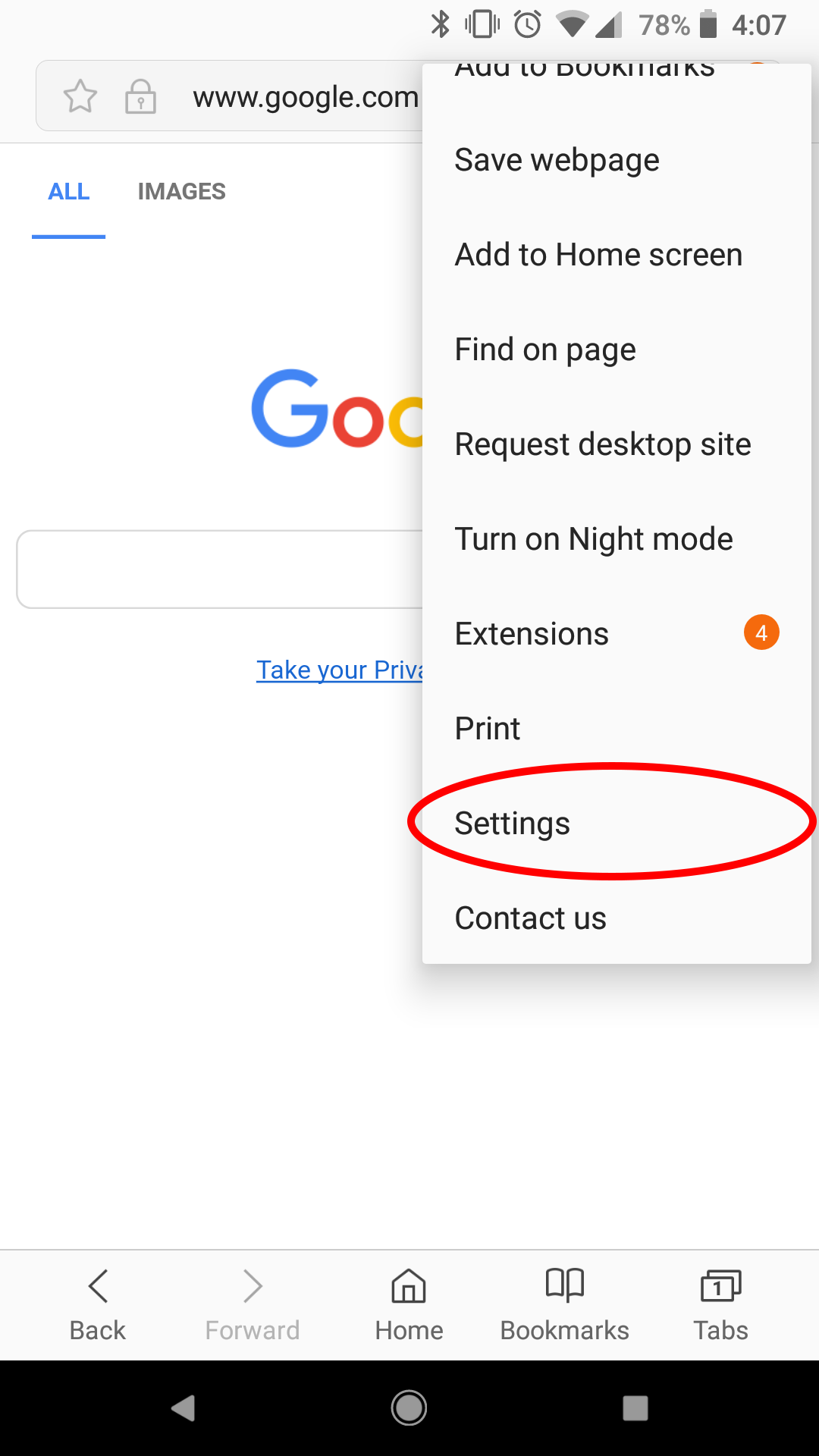
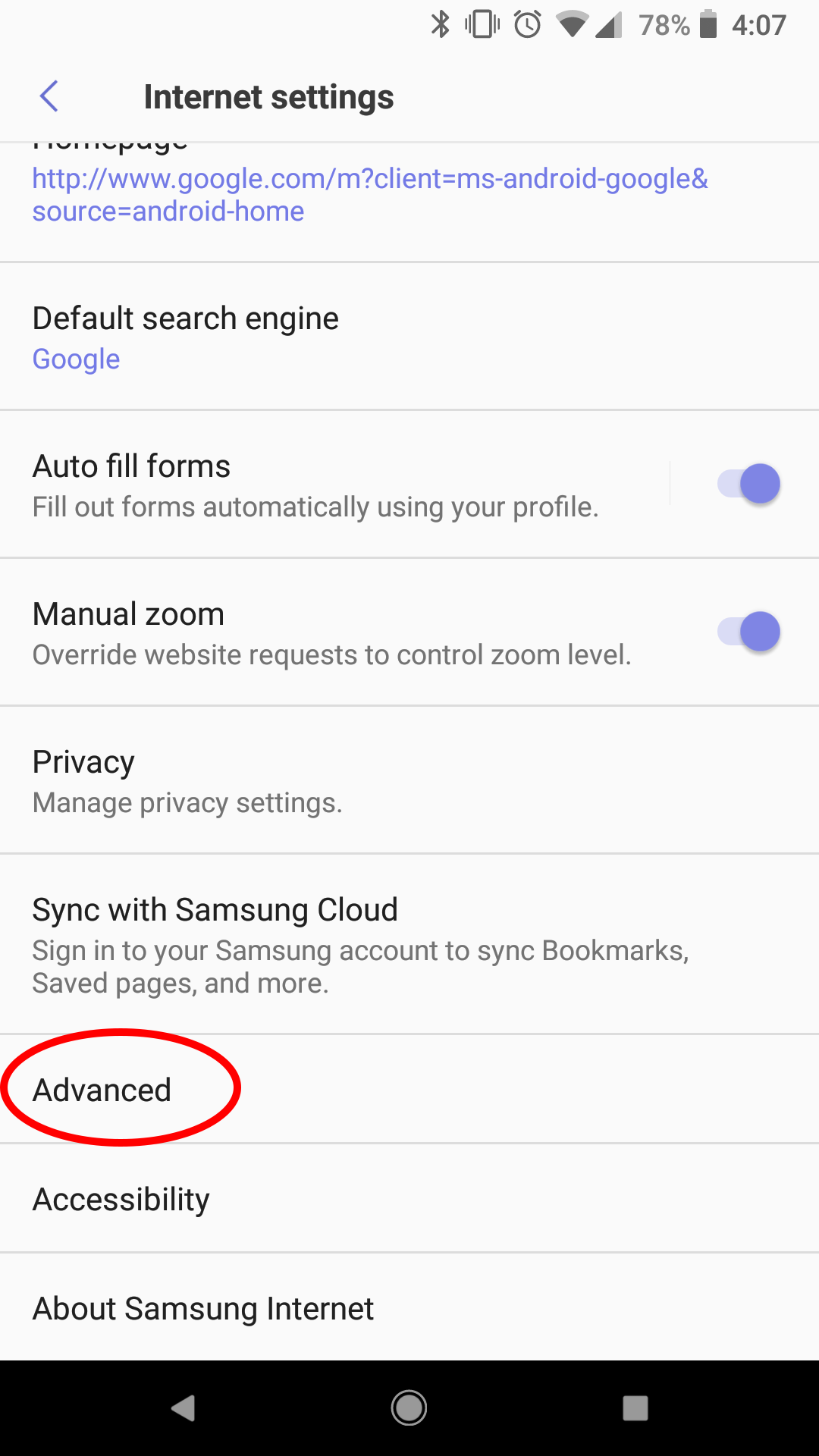
To see all sites sending you notifications, open the Samsung Internet settings, tap 'Advanced,' and tap 'Web notifications.' Here you can either turn off all alerts, or disable them for specific sites.
 

Firefox

Firefox doesn't support Android notification channels, and it doesn't have a general list of all sites you have granted notification permissions to. As a result, it's more difficult to revoke permissions from a specific site, but not impossible.
When you get a web notification, the site it came from is visible at the top. You have to go to that site in Firefox, tap the green lock in the address bar, and select 'Edit Site Settings.'
 

Redirecting web ads

Another type of malicious advertisements you might encounter are redirecting ads. These are web advertisements that hijack the parent page, and redirect you to a completely different site. If you've ever had a page open, and suddenly a vibrating ad about your phone having viruses appeared, you know what I'm talking about.
At the moment, the only mobile web browser that protects against these ads is Chrome. Just copy chrome://flags/#enable-framebusting-needs-sameorigin-or-usergesture and paste it in the address bar (you can't click/tap on it due to security concerns). Then tap/click the highlighted dropdown menu, change it to 'Enabled,' and restart the browser when asked.
To see the block in action, you can visit this page.
Hopefully, this guide has helped you track down annoying ads on your phone or tablet. If the app pushing ads is from the Play Store, remember to leave it a 1-star review and report it to Google.