Monday, December 31, 2018
New Year and New Hope
Our Department of New Year's Wishes (DONYW) has had great trepidation as to where our country and planet might be headed. But, ever the believer in things getting better, just as it takes some time for a body to reject an organ transplant, there are some additional glimmers of hope that the American body politic is rejecting the organ transplant that goes by the name Trump. In that spirit, DONYW wishes our loyal readers and anyone else reading this all the best for the new year, and has for your enjoyment and hope this (which is played best at high volume): Link to New Year's Gift


Sunday, December 30, 2018
Little Drummer Girl (TV-Mini Series, 2018)
If you like John Le Carre (accent aigu omitted), who wrote the Little Drummer Girl book (published in 1983), you will definitely like the six-episode (one hour each) mini-series. And if you like suspenseful, often complicated, and difficult to follow intrigue stuff set in the Mid-East, you will really like Little Drummer Girl. The acting is first-rate, and as John Grisham summed up well, the story is "cleverly and brilliantly plotted."
The TV-Mini Series broadcast on AMC for free last month. If you were smart, you set your DVR to record it. If not, you can watch it on Amazon Prime but it will cost you a few dollars per episode. Depending on your cable TV provider, it might be available for free On Demand. Of course, then you cannot skip the commercials. We cannot help with the decision whether to go the free or pay route, and encourage you to check with your financial advisor.
PS: Note, and please don't take this as a spoiler alert, there is "brief nudity" in the show. So, if you want more nudity, there are other sources.
PS: Note, and please don't take this as a spoiler alert, there is "brief nudity" in the show. So, if you want more nudity, there are other sources.
IMDb Link to Little Drummer Girl
Friday, December 28, 2018
Roma (Netflix, 2018)
Roma has gotten the highest marks from critics of all stripes and sizes. It's a story that chronicles a year in the life of a middle-class family's maid in Mexico City in the early 1970s. All I can say is that it's very slow, so that early bed-time goers likely will not make it even to the half-way point. That said, I'm told by those who chose to continue to watching it that it's excellent notwithstanding how slow it is.
IMDb Link to Roma

Thursday, December 27, 2018
Five Best Smartphones of 2018
[Courtesy of Yahoo Finance]
Apple iPhone XR

Price: $749
All the power of the iPhone XS for less
Apple’s (AAPL) iPhone XR gives you practically everything offered in the company’s XS and XS Max without the price tag. The XR features the same processor as the XS and XS Max, the same wide-angle lens rear camera, Apple’s Face ID facial recognition technology and, to top it off, is available in an array of color options.
The key differences between the XR and the XS and XS Max are the fact that the XR uses an LCD display, rather than the more vibrant OLED screens found on the XS and XS Max, and that the XR lacks a telephoto lens. That lens affords the XS and XS Max a 2X optical zoom, which ensures your photo doesn’t turn out pixelated and blurry when you zoom in on a subject.
Still, with a starting price of $749, the XR significantly undercuts the base XS and XS Max, which start at $999 and $1,099, respectively. The XR is easily the best iPhone for the money.
Google Pixel 3

Price: Pixel 3: $799; Pixel 3 XL $899
Takes incredible low-light photos
Google’s (GOOG, GOOGL) Pixel 3 and Pixel 3 XL are the ultimate Android smartphones. Sure, there are other Android phones on this list, but the Pixel 3 is exactly what Google believes a smartphone should be. And a whole heck of a lot of that includes the company’s Google Assistant. The AI-powered voice assistant is spread across the Pixel 3, which makes for a more convenient experience for you, and gives Google access to information about how people are using the software, ensuring it improves over time.
The 5.5-inch Pixel 3 is a relatively plain-looking device with its rectangular body and display, while the 6.3-inch Pixel 3 XL features a more modern look complete with a notch at the top of the screen that houses the phone’s front cameras. That larger display will cost you, though. The base Pixel 3 costs $799, while the XL comes in at $899.
Outside of their sizes, the Pixel 3 and Pixel 3 XL are virtually identical. And that includes their spectacular cameras. At launch the Pixel 3’s single-lens rear camera was already on a par with the iPhone’s camera. But when Google released its Night Sight software upgrade for the Pixel 3, the camera leapfrogged every other smartphone on the market. Night Sight can take photos in low-light settings that look so good, it’s almost as if they were shot during the day. It’s an incredible feat that competitors are surely working to counter at this very moment.
Apple iPhone XS Max

Price: $1,099
The best Apple has to offer
I’m a sucker for giant phones. I hate the fact that I can’t use them with one hand, but being able to watch videos and read articles on a big-screen handset is worth dropping it on occasion. That’s why the iPhone XS Max was the iPhone I fell hardest for in 2018. With a massive 6.3-inch OLED display, the Max provided vibrant colors on a panel that made it easier to watch movies on the go, or while hiding in a conference room to avoid work.
The XS Max has all of the features and functionality of the XR, but adds a second rear camera lens, the option for more storage and improved water resistance. There is one major drawback to the iPhone XS Max: the price. At $1,099, it’s an incredibly expensive smartphone. But if you can get past the sticker shock, the iPhone XS Max is sure to please.
OnePlus 6T

Price: $549
High-end features, at a mid-range price
OnePlus is a smartphone company that built its reputation through word-of-mouth advertising. You won’t see ads on TV or billboards on the highway for the handset maker, and yet OnePlus has an incredibly fierce following. And its latest, the 6T, ups the ante for the firm in a big way, adding an in-screen fingerprint reader and plenty of horsepower.
The 6T also debuted with the latest version of Google’s Android Operating System, Android Pie, and is the first OnePlus phone to launch on a major U.S. carrier: T-Mobile. Then there’s the price. OnePlus’s biggest selling point has always been that because the company doesn’t have to account for an advertising budget, it can charge less for its handsets.
Over the years the firm’s phones have seen their prices creep up ever so slightly, but you can still score a base 6T with 6GB of RAM and 128GB of storage for $549. Go all-out for the just plain silly McLaren Edition and its 10GB of RAM and 256GB of storage, and you’ll pay $699. That’s still less expensive than Apple’s iPhone XR, which is supposed to be the smartphone for everyone.
Samsung Galaxy Note 9

Price: $999
A big, beautiful screen and built-in stylus
Samsung’s big daddy, the Galaxy Note 9 is the smartphone giant’s halo phone, and it shows. It packs an absurdly large 6.4-inch display complete with the company’s fantastic Super AMOLED screen technology, as well as the Note line’s S Pen stylus.
The camera is more or less unchanged from the shooter used in the Galaxy S9 Plus, but that’s not exactly a negative, since that phone’s camera captured beautiful images. Samsung also added a new kind of AI feature called Scene Optimization that automatically tunes the camera’s settings based on the type of shot you’re taking.
Naturally, the Note 9 offers all-day battery life to match its enormous size and, of course, Samsung’s fast-charging technology. The Note 9 is an absolutely bruiser.
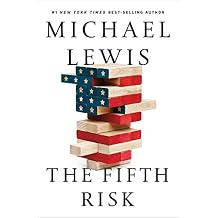
The Fifth Risk (Michael Lewis, 2018)
If you've read any of Michael Lewis's books (including, The Big Short, Money Ball, The Blind Side, Liar's Poker), you don't need to be told what a fantastic story teller he is. That is, the teller of true stories. Fittingly, The Fifth Risk is dedicated to Tom Wolfe, another great true story teller.
The Fifth Risk does not disappoint. It is more of a long essay or three short stories than a book, and takes just a couple of hours to read. If you were not scared about what harm could befall us as a result of the Trump Administration or just depressed about how incompetent it is, this book will set you straight; and if you have been scared all along, it will raise your fear level from Def Con 1 to Def Con 5--especially on nuclear and climate stuff. At heart, the book is a testament to the fundamentally amazingly good stuff government can do and does when in the hands of caring, knowledgeable, curious, smart people. In sharp distinction, it is a testament to how scary the world becomes when in the hands of ignorant and incurious people who thrive on a desire not to know what the problems really are so they never have to work on finding what a real solution might be. As the book explains, ignorant and incurious people live in a much easier world to live in: "There is an upside to ignorance, and a downside to knowledge. Knowledge makes life messier. It makes it a bit more difficult for a person who wishes to shrink the world to a worldview."
Cautionary Cooking Note Part Two and a Few Related Lessons
A loyal reader sent in the following comment to yesterday's post: "Don’t feel like you’re the only idiot. A couple of years ago, I was cooking dinner for my parents at their house in [place omitted on grounds of national security and to maintain the anonymity of the loyal reader], and made gravy with powdered sugar that I thought was flour. Fortunately, I could afford to throw that out, and serve the potatoes with a little melted butter." Here are a few of the lessons one might take from this comment:
1. It is far easier than anyone might think to confuse powdered sugar and flour.
2. We are all idiots. It's just the some of the idiotic things each of us does are more apparent than other idiotic things each of us does.
3. Some idiotic things are easier to correct, particularly if caught early, than other idiotic things.
4. One must always be careful in assuming one knows who any idiot is. In this instance, I was shocked, chagrined, saddened, and distraught that the loyal reader assumed that it was I who was the idiot who confused powdered sugar and flour as opposed to someone else who might have prepared the rib roast. That said, the loyal reader's assumption was the correct one. Indeed, it was I who was the idiot, and the certain someone else was the person who figured out what happened.
Wednesday, December 26, 2018
Cautionary Note re Cooking a Rib Roast and Storing Spices
One very easy way to prepare a rib roast is to let sit at room temperature for 3-5 hours, season it with pepper and garlic powder, stuff some garlic slices into it, cover it with flour, and then cook it for 5-7 minutes per pound at 500 degrees, and then turn off the oven and just wait for 2.5 hours, then take it out and let it rest for a half hour or so before carving. Here's the one thing to be very very careful about: If you find the flour is not sticking to the roast, double check that you are actually applying flour and not powdered sugar. Otherwise, the roast will come out edible, but with a strange sweet taste to it. One easy way to avoid this kind of mistake is to leave things like flour and powdered sugar in their original packages instead of putting them into canisters or, if you do put them into canisters, label the canisters.
Monday, December 24, 2018

Sunday, December 23, 2018
Pros and Cons of Shopping at Fry's at 5 am on a Sunday (in Phoenix)
Pros:
1. Plenty of great parking spaces.
2. Faster to get there and back home.
3. Fewer people in the store.
Cons:
1. The floor scrubbing machines are very loud.
2. Some sections are not actually open (meat counter; salad bar; chicken wing bar).
3. It's very bright.
4. Fewer self-checkout stalls are open.
1. Plenty of great parking spaces.
2. Faster to get there and back home.
3. Fewer people in the store.
Cons:
1. The floor scrubbing machines are very loud.
2. Some sections are not actually open (meat counter; salad bar; chicken wing bar).
3. It's very bright.
4. Fewer self-checkout stalls are open.
Saturday, December 22, 2018
App for Tracking Flights
The best flight tracker app used to be Flight Tracker Pro, but it no longer works, and Flight Tracker Free is terrible (putting aside the ads, it would be terrible even without ads). There's no app that is as quite as good as Flight Tracker Pro was, but Flight View--Flight Track, which is the paid version, seems to be the best of what's out there and certainly comes close and just might be a bit better in a couple of minor ways. It costs only 99 cents (plus tax), which is worth it to not be plagued with ads as Flight View Free is.

Link on Play to Flight View--Flight Track
Friday, December 21, 2018
Xmas Wish for a Deep State
Dear Santa:
I believe in you Santa (knowing that the only two sources of Xmas gifts are you, Santa, and Amazon,
and Amazon cannot grant me this wish). I've been a really good boy this year. Here is my wish: While everything that President Trump says is a lie, please have one thing he says not be a lie, namely, that there is a Deep State. Because, if there is a Deep State, maybe it can do what General Mattis could not do in keeping Trump from making this world a scarily dangerous place. If that's not possible, I'll take a train set.
Thank you, Santa, and Merry Xmas.
PS: As a thank you in advance, Santa, here is Mariah Carey singing all she wants for Xmas is you: Link to Song
PPS: You need not share this letter wish with the Failing NYT. They eavesdrop on everything I write, say, or think.
PPS: You need not share this letter wish with the Failing NYT. They eavesdrop on everything I write, say, or think.
Thursday, December 20, 2018
Standing Rib Roast Sale in Phoenix at Fry's
With great hesitation for fear it will cause a run and deplete the inventory, Fry's has slashed the price of its standing bone-in rib roast from $13.49/lb to $3.49/pound. Costco's price for the same grade is $13.89. You should not buy it more than 3 days before you are going to cook it or freeze it. When cooking, please use the high-temp method. If you don't know what a standing bone-in rib roast looks like, ask at the butcher counter or take this photo with you and look in the meat department for something that resembles this:
:format(jpg)/d2lnr5mha7bycj.cloudfront.net/product-image/file/large_473c99bc-e915-4f4f-9734-dc290453a292.jpg)
Wednesday, December 19, 2018
Toward a Gift-Free Xmas
[Courtesy of the Washington Post (which might or might not have stolen the idea from someone]
It may be too late this holiday season, but you now have more than a year to prepare family and friends for your new reality -- a gift-free Christmas.
And before you call me Scrooge or the Grinch, hear me out.
We know a lot of people are not saving enough for retirement. Parents and students are borrowing record amounts for college. Surveys continue to find that folks don't have any money stashed away to help them when hit with a financial emergency.
But along come the holidays and the spirit of the season pushes people to overspend. Your retirement can wait, you reason. You don't want to disappoint the children, although you have nothing saved for their college education. An unexpected car repair of $400 has to be put on a credit card -- one that is nearly maxed out.
Never mind this: A poll by website Finder.com revealed that 56 percent of Americans say they have received at least one unwanted gift during the holidays, and 29 percent say they just keep unwelcome presents. Those who don’t shove these gifts in a closet exchange them (22 percent), regift them (22 percent), sell the stuff (10 percent), hand them back to the giver (8 percent) or just throw them away (6 percent).
Start 2019 with a commitment to get off the gift-giving train, at least until you've taken care of some important things like saving for retirement or building an emergency fund. (By the way, having a credit card "in case of an emergency" is not the same as having a rainy-day fund.)
Now, if you're going to do a no-gift Christmas, here are some rules you need to follow.
Give people plenty of warning. You’ve got to prepare folks for a no-gift Christmas, otherwise you risk angering family and friends who feel gift giving is, in part, about reciprocity.
"I am part of the no-gift resistance crowd, entirely because it keeps coming from one person without the buy-in of everyone involved, without the consideration of how other people will be affected, and always so late in the season that it's already past the point when lots of people have been making or purchasing gifts, already," one reader wrote. "I wouldn't mind it so much if everyone involved agreed to it at Christmas for the next year."
The truth is many people expect to give and then get a gift. That's not how it should work, but we've conditioned ourselves to this practice. It's why your holiday gift list keeps growing. Somebody gave you a gift last year. You feel bad that you didn't have anything for that person, so you add him or her to your Christmas list.
You don’t need buy-in from everyone. If you decide that you just can’t afford to purchase presents, why should you have to get a consensus from everyone in your circle?
You don't.
You can certainly invite others to join you in your mission to spend less, especially if you know they, too, are having financial troubles. Then it can be a family affair. However, if someone doesn't want to go along, that's his or her choice.
And if you are not struggling financially and you want to give, you don’t have to agree to a no-gift holiday. What happened to, “It’s better to give than receive”?
Don’t spring your no-gift idea while you’re opening presents. It just seems ungrateful to say, “Love your gift, but I’m not getting you anything next year.”
The start of the new year is a good time to share your new policy, because in all likelihood your friends and family will be making resolutions to handle their finances better, especially given the turbulence in the stock market.
A Fidelity Investments poll found that the top three most popular financial resolutions for 2019 are saving more, paying down debt and spending less money.
Don’t overshare. People don’t have to know all your business. Say something like, “I really need to focus on some financial issues right now.”
Don’t tell people what do to with their money. You can release people from buying gifts for you or your children, but don’t demand that they stop giving, too. If grandma is financially stable and wants to give to you and the kids, don’t take away her joy of giving.
Finally, a no-gift Christmas doesn’t have to mean you can’t be generous. Time is such a precious commodity, so spend more of it with the people you love. That’s a gift they can’t regift or take back to the store.
Tuesday, December 18, 2018
Bodyguard (2018 Netflix)
Watched just the first episode. But, if it's any indication, this is one riveting show.
IMDb Link to Bodyguard
IMDb Link to Bodyguard
Recommended Stock/Bond Percentage Holding at Every Age
[Prefatory Notes: We express no opinion (of either agreeing with or disagreeing with) Money on this piece. The reason we decided to reproduce it is because, unlike most articles we've seen on the topic generally, this piece takes a comprehensive view across all age levels, and digs a little deeper than most as to each. As always, our principal reminder is to rely more on your financial advisor than any article, and to be aware that your tolerance for risk and ability to handle losses as well as your need for rewards and ability to handle missing out on gains might not be the same as the typical person or anyone else that is assumed to be the model for any generalized financial analysis or advice]
If you want a secure retirement, you can’t just save. You also need to make sure your investment portfolio keeps pace with inflation. For most Americans, that’s going to mean investing in the stock market, whether inside a 401(k) or at an online brokerage. But determining how much of your money to put in stocks can be tricky.
When you’re young, the hardest part may simply be getting started. In your forties, it’s riding out the market’s ups and downs without losing your cool. After you finally retire, you need to make those hard-earned savings last.
Understanding some simple investing precepts can make the job a lot easier—and up your odds of success. To get started finding the right balance of stocks and bonds for you, read on.
Starting Out
The conundrum: This is the time when you are supposed to invest fearlessly, taking big risks, so you can reap big rewards years down the road. But it’s easier said than done.
The generation that came of age during the Great Recession hasn’t had an easy time financially. After graduating into the weakest job market in memory, you’ve found yourselves saddled with record amounts of student-loan debt, as well as soaring rents and home prices.
As a result, many young people don’t have a lot left over to invest. One recent study by the National Institute on Retirement Security found two-thirds of millennials have nothing saved for retirement.
Even millennials who are ready to invest don’t necessarily favor stocks. Blame, perhaps, memories of the 2008 market crash, which took place when the oldest millennials were in their mid-twenties. “Just when they entered the workforce, they lived through the second–largest stock market drop in history,” says Brian Schmehil, a financial planner in Chicago.
A recent Bankrate survey asked millennials about their favorite long-term investments. More than half said cash or real estate, while only 23% cited the stock market. The rest listed overly conservative options like gold and bonds or overly speculative ones like crypto-currencies.
The solution: Invest just a little to get started. While setting aside money may be hard, it’s easier than ever to get in the market. Over the past decade, more and more 401(k)s have begun auto-enrolling participants. Unless you opt out, your employer may have already taken the leap for you.
While you may not have much money to invest at first, in some ways you can think of that as an advantage. Experts say now is the time to be aggressive, with 85% to 90% of your investments in stocks, and 10% to 15% in bonds. Stocks offer more growth potential, along with more volatility, while bonds have less upside but throw off regular income. With just a few thousand (or even a few hundred) dollars at stake, the prospect of losing a third or even half your investment in the next bear market shouldn’t seem too terrifying.
One way to think about it, says Wade Pfau, professor of retirement income at the American College, is to consider your coming years in the workforce as part of your overall investment portfolio. “Your future salary behaves like a bond”—a steady income stream to help you ride out rough markets, he says. Of course, simply knowing you have time to recoup your losses doesn’t mean riding out big market dips will be easy. But you won’t have to wait as long as you might think for the stock market to get back into growth mode. Going back to the 1920s, stock investors have endured eight different bear markets, hitting roughly once a decade. While stocks lost about 40% of their value on average each time, the duration of the downturn—measured from the month the market hit its last high until the month it bottomed out—was relatively short: about 1.4 years, on average.

View photos

Subscribe to:
Posts (Atom)